Words: Andrea Dimofte
Photos: Lucía Blasco
November 2025
In an age of mass production and digital ease, many of us seem to have forgotten how to work with our hands. The fading of craftsmanship is more than a practical loss—it’s an emotional one. Working with our hands roots us in the present, connecting us to the world around us and offering a tangible expression of creativity and skill. Therapy? Absolutely. It gives us a quiet, intentional focus that steadies the mind while filling us with accomplishment and pride. Craftsmanship also protects old traditions and keeps cultural identities alive. When a craft disappears, we lose not just an object, but the story it tells. And in forgetting these crafts, we risk forgetting a piece of what makes us human.
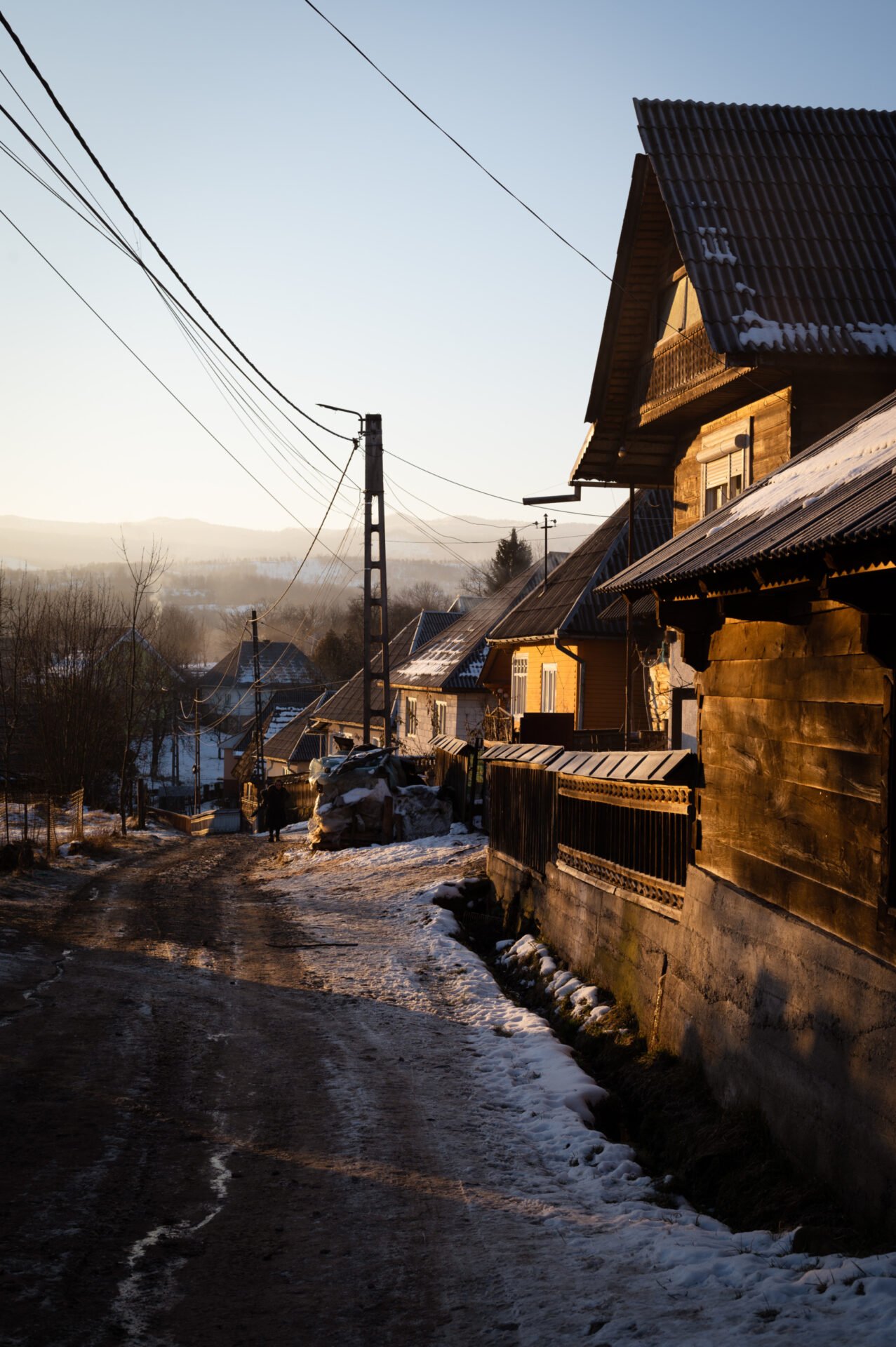
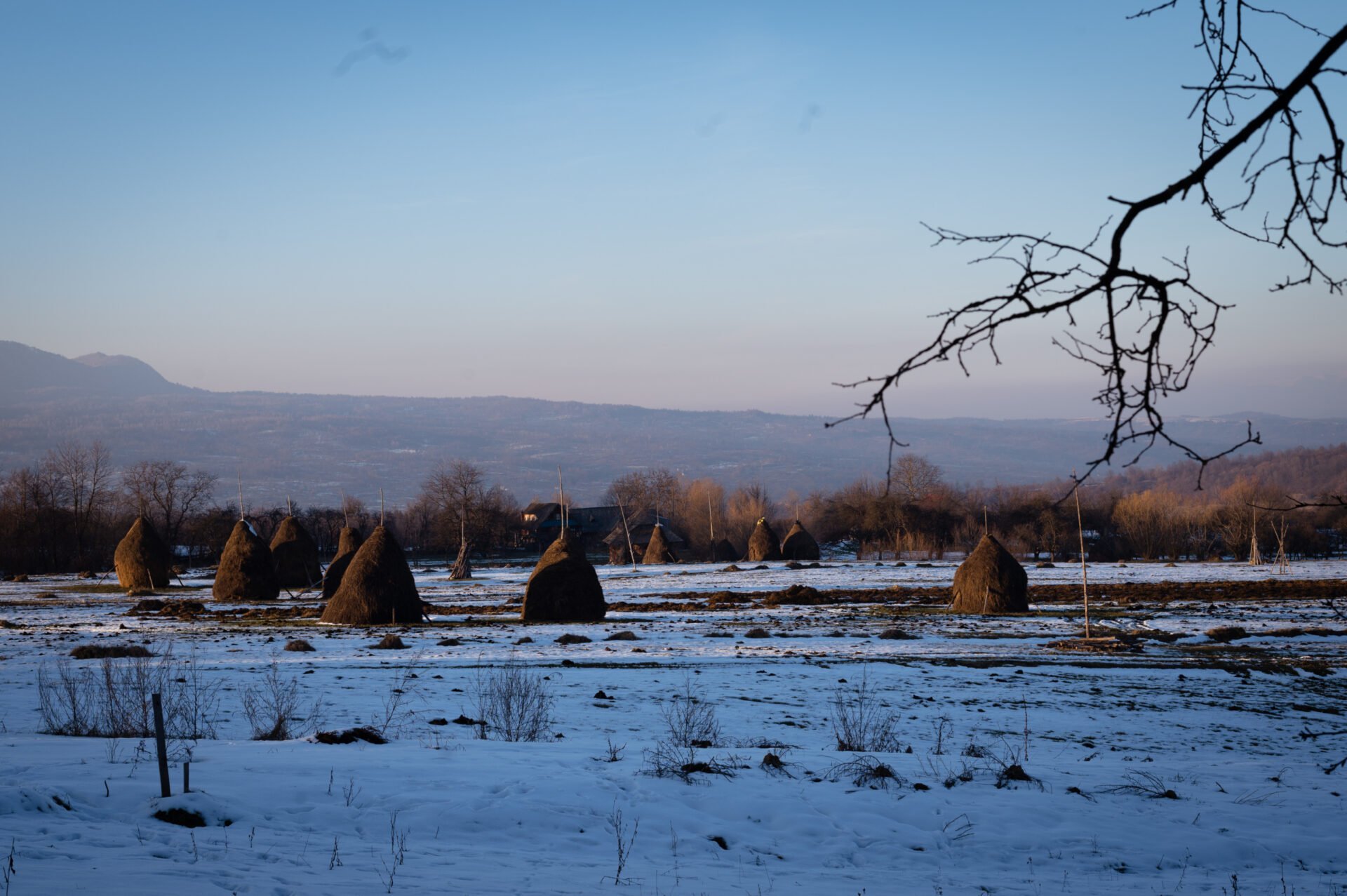
But in the mountainous region of Maramureș in northern Romania, the rhythms of life have been shaped by centuries of tradition—and many people still work with their hands. Nestled between the Carpathian Mountains and the border with Ukraine, Maramureș is renowned for its deep cultural heritage, including its distinctive art forms, architecture, and crafts. Here, the preservation of traditional skills is not merely a way of maintaining a cultural identity, but an act of reverence to the past. Artisans pass down the knowledge and techniques over and over.
A while back, I was lucky enough to visit and talk to some local artists. I discovered that while this region has seen a growth in tourism, many locals still engage with craft making, not just for tourism, but for themselves. From intricately carved wooden gates to the famous painted crosses of the Merry Cemetery, Maramureș is a living museum. Here, history lives on through the hands of those who continue to honor these crafts.

The Wooden Gates: Carving a Legacy
The art of wood carving is one of the most iconic traditions of Maramureș, with wooden gates being a symbol of both cultural heritage and the region’s distinctive rural architecture. These gates adorn the entrances to homes and farms. They often feature elaborate geometric patterns, floral motifs, and symbols derived from ancient traditions. The symbolic nature of the wooden gate cannot be understated. For centuries, these gates have served as a protective barrier, not just against the physical elements, but also against spiritual threats. The designs are often rich with symbolism, reflecting the values, beliefs, and social status of the family. Some patterns are thought to ward off evil spirits, while others represent the cycle of life, fertility, or family unity.
Ioan Petric, a woodworker from Breb Village, is one of the many artisans who continues this tradition today. Though he only began carving wood seriously just under 10 years ago, Ioan has been working with his hands since childhood. In his workshop, I also met Adrian Vlasin, a student from the village, who was learning the craft under Ioan’s guidance. Together, they were carving an oak fence, a material Ioan favors for its durability and resistance to the elements. Oak is, after all, the preferred wood for traditional Maramureș carvings.
“I carve a lot of fences, traditional Maramureș doors, and photo frames,” Ioan explains. The door is the most emblematic of the region’s woodcraft, with each piece often taking anywhere from two weeks to three months to complete, depending on its size and complexity. While Ioan enjoys creating these doors, he admits that he sometimes becomes a little bored of them too. “I have to admit, I am getting a bit bored of creating gates,” he says, laughing. “But it’s part of what I get paid to do.” Ioan’s work has found an audience among “traditional art lovers” —those who have an appreciation for handcrafted objects with a cultural value. Where? Locally, in Bucharest, and even internationally. “They know that these things have value,” he explains.
While Ioan takes pride in his traditional carvings, he is also passionate about creating sculptures that express his personal reflections, just out of passion. I was especially drawn to one of his works, “The Unsatisfied Man,” depicting a figure sitting on a nut—a symbol of wealth—whose arms are raised in a gesture of dissatisfaction. “Instead of being happy for what he has under him, the man asks for more,” Ioan reflects, explaining that this piece symbolizes the dissatisfaction he sees in modern life. When I asked why he doesn’t create more passion pieces, he said those are just for him and to be exposed, never for sale.


The Merry Cemetery: Painted Crosses and Personal Stories
Another iconic feature of Maramureș is the Merry Cemetery in Săpânța, a unique burial site where the graves are marked by brightly painted wooden crosses. These crosses are not only a way of commemorating the dead, but also serve as a celebration of life, with each one featuring a portrait of the deceased and a verse that encapsulates a key moment or sentiment from their life. The cemetery is known as “merry” because of the colorful and sometimes humorous way in which the stories of the dead are told. But while many of the verses contain light-hearted remarks, others tell tales of hardship and loss, revealing the full spectrum of human experience.
There, I met Anuța Stan who was helping her husband, Ghiorge with the intricate work of painting these crosses. “The crosses are happy, like the people who make them,” she says. While Ghiorge constructs the wooden crosses, Anuța is responsible for painting them, a craft she learned “out of thin air—on the go,” as she puts it. The crosses are a family affair, with their son helping with their reconditioning, ensuring they remain vibrant for the future.
The painted verses on the crosses represent stories. While some people select their own portraits and verses before death, Anuța says that it is often the continued living family who chooses them after the deceased has passed. One verse she reads aloud to me speaks of a life marked by hardship: “I have been orphaned by my mother, and nobody took notice of me. Throughout my life, I have worked hard for my village to be proud of me.” Clearly, not all the verses are happy. Some tell tales of sacrifice, unfulfilled dreams, and deep loss. Yet, despite the sometimes somber themes, the use of color and imagery transforms these stories into vivid, lasting memories.


Pottery: Recreating the Essence of the Village
In the town of Baia Sprie, Daniel Les continues another traditional craft: pottery. “I try to recreate the essence of the village I grew up in,” Daniel explains. He draws inspiration from his childhood in the village of Tulghies, 30 km from Baia Sprie, and strives to represent the people and animals that formed the fabric of his rural life. Like many artisans in Maramureș, Daniel learned his trade from his father and is now passing the skills down to his own son.
Daniel’s pottery reflects the lives of the shepherds, farmers, and buffalo herders of his community. “I want to show the people I grew up with—from the shepherd to the man who takes care of buffaloes,” he says. Each piece he creates captures a moment in the life of his village, from the simple clay bowls used in daily chores to the more intricate sculptural works that evoke the essence of his community.
I had the chance to experience Daniel’s work firsthand when I stayed at his bed and breakfast, a cozy and welcoming place where he offers a few rooms for visitors looking to explore the region. His home is not just a place to stay but a space where the tradition of pottery is kept very much alive. With steady hands, I watched him sit proudly behind the wheel, shaping a lump of clay into something beautiful. As the wheel spun, the clay seemed to take on a life of its own, molding to his touch, each movement precise and deliberate. It was a reminder that with just a few movements, a piece of raw material can become something lasting and meaningful. Daniel offers classes for those interested in learning pottery, giving you an opportunity to try your hand at creating something of your own—so if you happen to pass by, make sure to say hi!


In Maramureș, craftsmanship is not just about creating beautiful objects—it’s about preserving a way of life, a connection to the land, and a shared cultural history. Whether carving wooden gates, painting crosses, or shaping pottery, the artisans of this region continue to carry forward the traditions of their families. Through their work, they ensure that the stories of the past remain alive for future generations, passing down not only their skills but their love for the culture. The hands that shape the wood, paint the crosses, and mold the clay are the keepers of Maramureș’s living history.